
Closure vs Frontal: What’s the difference and which should you choose?
Choosing between a closure vs frontal can be confusing for anyone new to wigs or hair extensions. While both serve to create a natural-looking hairline and protect your natural hair, they differ in size, versatility, and how they blend with your scalp. In this guide, we’ll break down the key differences between closures and frontals to help you make the best decision for your style, lifestyle, and budget.
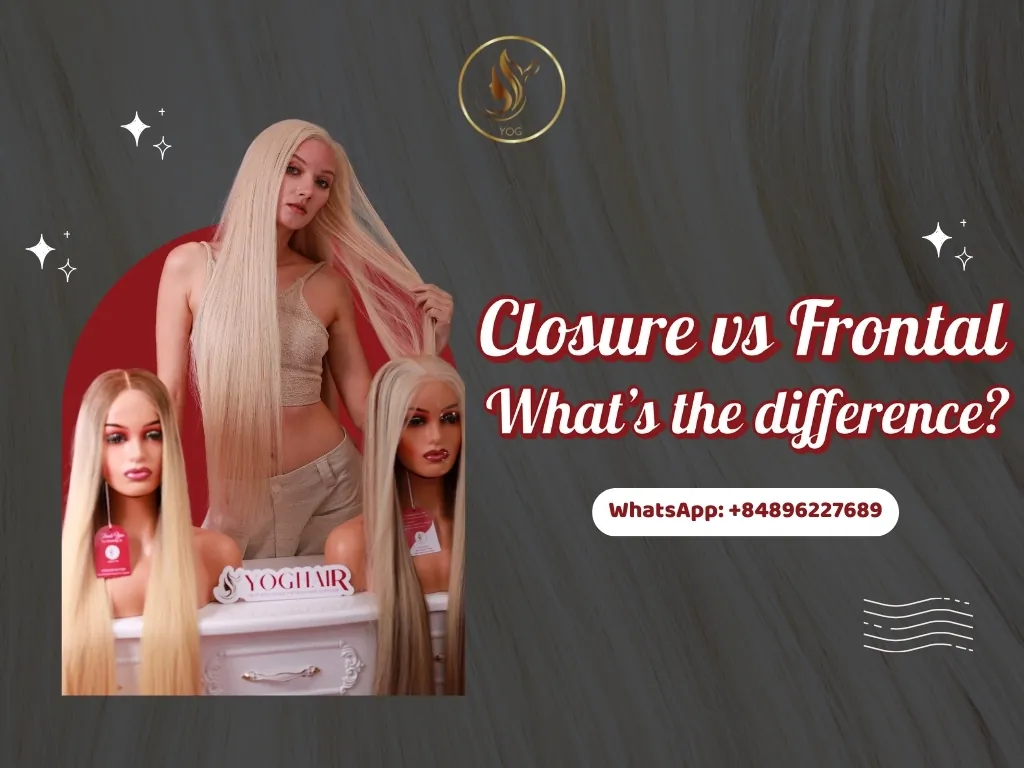
What is a Closure?
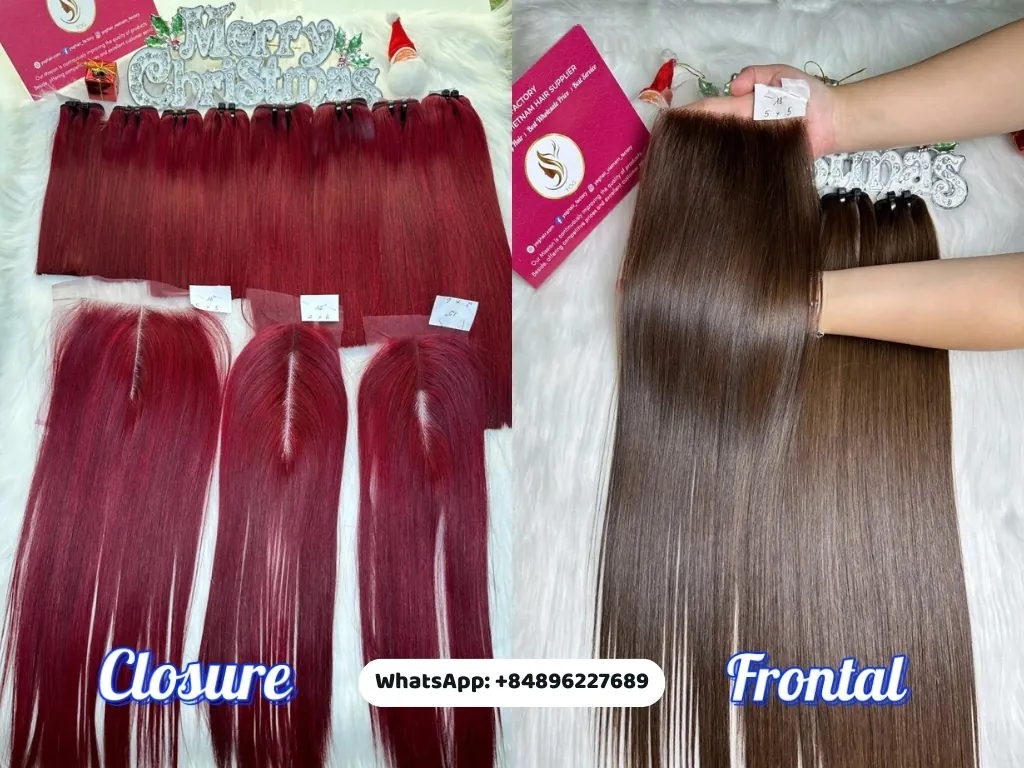
A closure is a small hairpiece that is usually a square or rectangular lace or silk piece, used to close off a wig or weave. Typically, closures come in sizes like 4×4 or 5×5, which cover a portion of the scalp (usually the middle or side part area). When comparing 5×5 closure vs frontal, closures offer a simpler, more beginner-friendly option because they’re designed for less coverage but easier maintenance.
A lace closure is the most common type, where human hair is tied onto a lace base, creating a natural-looking scalp effect. Some closures use silk, but lace remains the top choice because it’s lightweight and blends better with the scalp. Whether you’re buying a closure wigs or installing closure hair onto a sew-in, the goal is the same: provide a neat, finished look without leaving your natural hair exposed.
Closures are popular among people who want a protective hairstyle with minimal fuss. Unlike a frontal wig or frontal closure wig, which runs ear to ear and allows for multiple parting styles, a closure typically offers one or two parting options. That’s why, when weighing frontal vs closure pros and cons, closures win for simplicity, lower cost, and less daily styling effort but they offer less versatility compared to frontals.
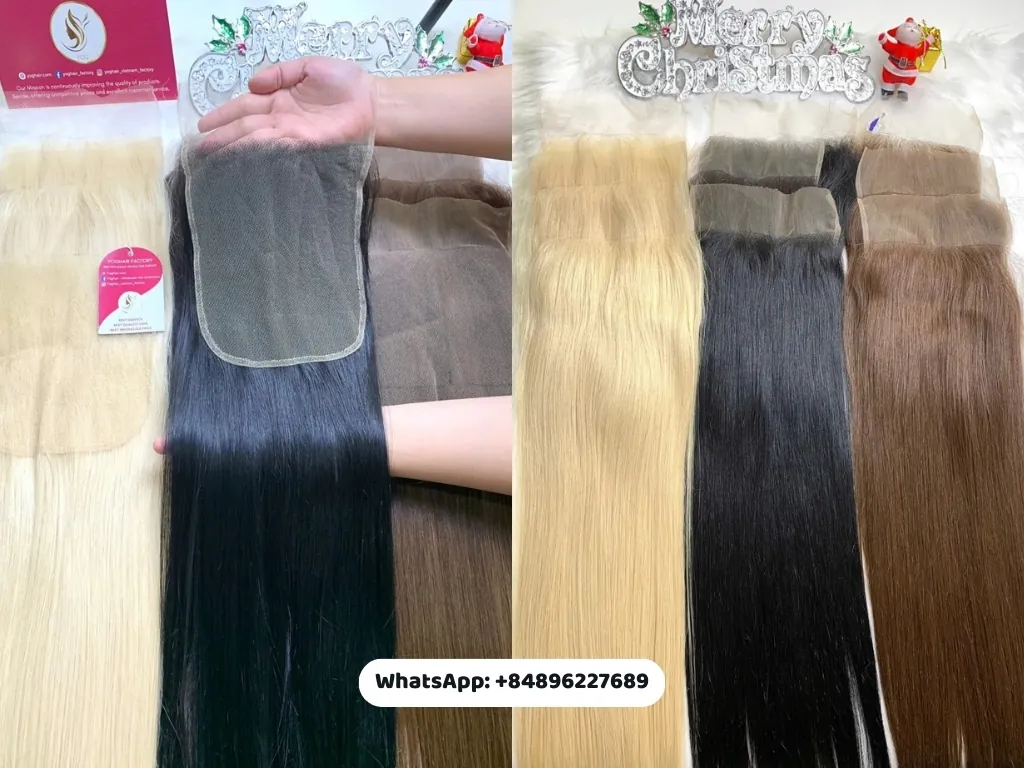
What is a Frontal?
A frontal is a lace-based hairpiece, usually 13×4 or 13×6 inches, designed to mimic the entire front hairline, from one ear to the other. Unlike closure hair, which covers a small parting area, a frontal provides a full hairline for a seamless, natural look, making it a key component in frontal wigs and frontal closure wigs.
In lace closure vs frontal comparisons, frontals stand out for their ability to support diverse hairstyles, such as ponytails, updos, and side parts, due to their extensive coverage. They are ideal for those seeking a realistic scalp appearance across the forehead.
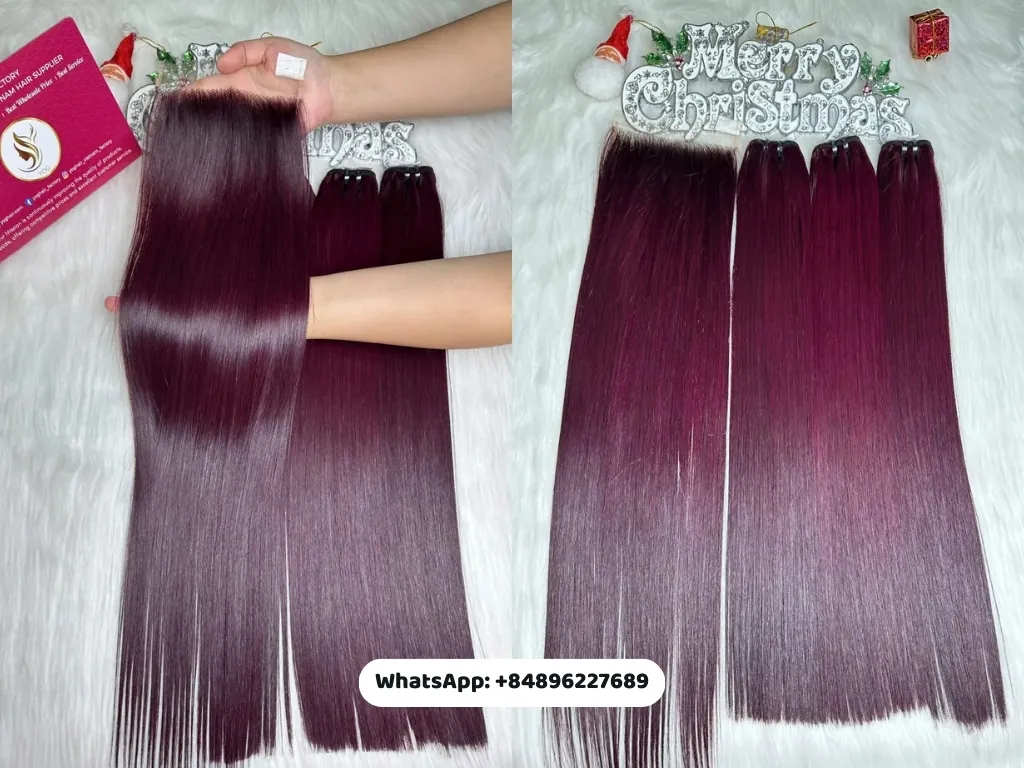
Key differences between Closure and Frontal
When comparing closure vs frontal, the key differences come down to size, styling versatility, installation, and maintenance. Understanding these details will help you decide which one fits your hair goals, budget, and lifestyle.
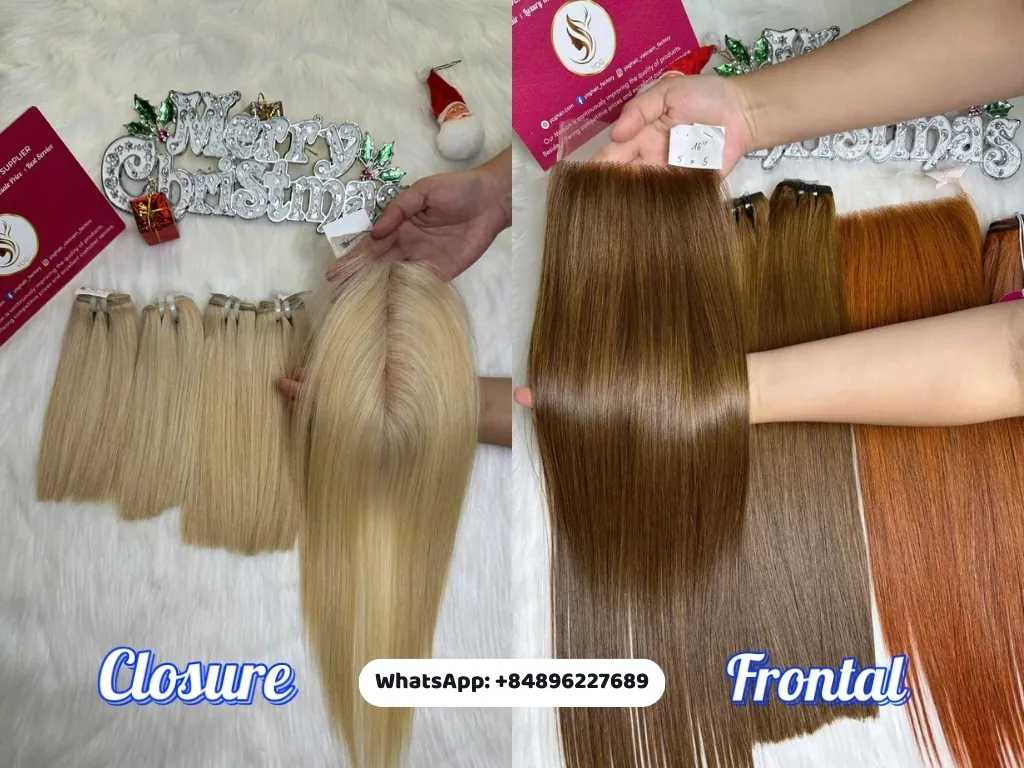
- Size and coverage: A closure typically measures 4×4 or 5×5 inches, covering a small section at the top or crown of your head. It’s designed to close off a sew-in or wig install, providing a natural-looking part without exposing your natural hair. A frontal, on the other hand, usually measures 13×4 or 13×6 inches and stretches ear to ear, covering your entire hairline. This bigger coverage is why people often choose a frontal wig or frontal closure wig when they want to recreate a natural hairline or switch up parting styles.
- Styling versatility: If you love trying different looks such as side parts, middle parts, slicked-back ponytails, the frontal gives you maximum flexibility. You can part it anywhere across the lace. In contrast, a closure wig or closure hair is more limited, usually offering a set part (middle or side) or small shift range. This is a big factor in the frontal vs closure pros and cons debate: frontals win for versatility, but closures are easier to manage for everyday wear.
- Installation and maintenance: A lace closure vs frontal also differs in how it’s installed and maintained. Closures are easier and quicker to install, making them more manageable for DIY wig installation at home. Frontals usually require adhesive or sewing and may need touch-ups to keep the lace laying flat and natural which adds to maintenance time and costs.
- Cost and longevity: Because of their larger size and styling flexibility, frontals generally cost more than closures. However, closures tend to last longer because they undergo less tension and handling during daily wear. If you’re weighing 5×5 closure vs frontal, remember: closures are often the better budget-friendly, long-lasting choice, while frontals are an investment for those who prioritize high-impact styling.
Pros and cons of Closures
When choosing between a closure vs frontal, it’s essential to understand what makes closures a popular pick and where they fall short. Whether you’re buying a closure wig, installing closure hair into a sew-in, or comparing a lace closure vs frontal, here’s a detailed breakdown of the pros and cons.
Pros of Closures
- Easy to install: Closures are ideal for beginners. They typically cover a 4×4 or 5×5 area on the scalp, meaning less lace to work with and less adhesive required. You can sew them in, glue them down, or even wear them as a glueless wig, making installation quick and beginner-friendly compared to a more complex frontal wig.
- Low daily maintenance: Once a closure wig is installed, it stays in place with minimal adjustments. You don’t need to restyle the hairline daily or worry about the lace lifting along the edges, as you might with a frontal closure wig. This makes closures perfect for people who wanna set-it-and-forget-it protective style.
- More affordable: In the frontal vs closure pros and cons discussion, closures usually win on price. They’re smaller, require less lace and hair, and typically cost less than frontals. For buyers watching their budget, a closure offers great value without sacrificing a natural-looking part.
4, Longer lifespan: Because closures cover a smaller section and undergo less tension from styling or adhesive, they generally last longer than frontals. With proper care such as gentle washing, minimal heat use, and good storage, a lace closure can outlast a frontal by several months.
- Better scalp protection: A closure keeps most of your natural hair tucked away and protected under the install, helping prevent breakage or damage. It’s especially useful if you’re trying to grow your natural hair or avoid heat styling.
Cons of Closures
- Limited styling options: Closures usually come pre-parted or allow minimal parting shifts. If you’re someone who loves switching between middle parts, side parts, or slicked-back ponytails, a closure will feel restrictive compared to a frontal wig that runs ear to ear.
- Smaller coverage area: A closure only covers the crown area, leaving your edges exposed unless paired carefully with other bundles or weft hair extensions. If you want full hairline recreation, especially to cover thinning edges or a receding hairline, a frontal or frontal closure wig is the better option.
- Less natural hairline appearance: While closures create a realistic part, they don’t fully mimic a natural hairline across your forehead and temples. For people aiming for a flawless, edge-to-edge look, the lace closure vs frontal comparison often leans in favor of the frontal.

Pros and cons of Frontal
Frontal wigs have become a go-to solution for individuals seeking a natural-looking hairline and versatile styling options. But like all hair extensions and wigs, they come with their own advantages and drawbacks.
Pros of Frontal
- Exceptional styling versatility: Frontals cover the entire hairline from ear to ear, allowing for a wide range of hairstyles. Unlike closure hair, which is limited to fixed partings, frontals support ponytails, updos, braids, and multiple parting styles, making them ideal for frontal wigs. In frontal vs closure pros and cons, this versatility is a major advantage for those who frequently change their look or prefer bold, dynamic styles.
- Natural hairline appearance: A frontal mimics the natural scalp across the forehead, providing a seamless, realistic hairline that blends effortlessly with your skin. With transparent or HD lace frontal options, frontal closure wigs achieve an undetectable finish, especially when compared to lace closure vs frontal, where closures cover only a small parting area. This makes frontals perfect for those seeking a flawless, natural look.
- Customizable parting options: Unlike closure wigs, which are pre-parted, frontals allow free parting anywhere along the hairline. This flexibility, highlighted in 5×5 closure vs frontal, enables users to experiment with side parts, middle parts, or zigzag patterns without needing additional hairpieces, enhancing the creative potential of frontal wigs.
- Seamless blending: Frontals eliminate the need to blend natural hair at the hairline, as their ear-to-ear coverage conceals weave tracks or scalp. In lace closure vs frontal, frontals excel for those with sparse hairlines or those seeking a polished look without exposing their natural hair, making them a staple in frontal closure wigs.
- Durability: When properly maintained, high-quality frontals can last several months, offering good value despite their higher cost. Their robust lace construction, used in frontal wigs, withstands frequent styling, making them a durable choice for long-term use compared to closure hair.
Cons of Frontal
- Higher cost: Frontals are significantly more expensive, with prices ranging from $50 to $200, depending on lace quality and size. In frontal vs closure pros and cons, this cost is a notable drawback compared to closure wigs, which are typically $20-$100, making frontals less accessible for budget-conscious buyers.
- Complex installation: Installing a frontal requires advanced skills, as it involves gluing or sewing the lace along the entire hairline for a seamless blend. This process, common in frontal closure wigs, can take several hours and often requires professional assistance, unlike the simpler installation of 5×5 closure vs frontal.
- Intensive maintenance: Frontals demand rigorous upkeep to maintain their appearance. The lace must be cleaned regularly, adhesives reapplied, and the hairline handled gently to avoid damage. In lace closure vs frontal, frontals require more time and effort than the low-maintenance closure hair, which can be a hassle for busy individuals.
- Potential discomfort: The extensive lace and adhesive used in frontal wigs can cause discomfort, especially for those with sensitive scalps. Prolonged wear may lead to irritation or itching, a contrast to the lightweight, breathable nature of closure wigs in frontal vs closure pros and cons.
- Skill level requirement: Frontals are less beginner-friendly due to their complex installation and maintenance needs. In 5×5 closure vs frontal, closures are more approachable for novices, while frontals may overwhelm those new to wigs or weaves, requiring practice or professional help for optimal results.
Closure vs Frontal: Which is suitable for you?
Having explored the detailed differences and the individual pros and cons of closures and frontals, the ultimate question remains: Closure vs Frontal: Which is suitable for you? The answer isn’t universal; rather, it hinges on a careful evaluation of your personal needs, lifestyle, styling preferences, budget, and commitment to maintenance.
If you’re looking for a low-maintenance, affordable option that provides a natural part without the need for frequent touch-ups, a closure is the better fit, especially for beginners or those who prefer everyday, laid-back styles. On the other hand, if you love experimenting with different hairstyles, want to wear your hair pulled back or parted in multiple ways, and don’t mind a bit more upkeep, a frontal offers unmatched styling flexibility and a full, realistic hairline.
Conclusion
In summary, understanding the key differences in the Closure vs Frontal comparison comes down to your styling needs, budget, and maintenance preferences. Closures are perfect for those seeking simplicity and everyday wear, while frontals offer full styling freedom and a more natural hairline for bold, versatile looks. Ready to upgrade your hair looking? Shop premium Closure and Frontal pieces now at Yoghair for high-quality, affordable lace options that suit every style and occasion.
- Instagram: @yoghair_wholesale_factory
- WhatsApp: +84896227689
- Email: wholesaleyoghair@gmail.com


 Ms. Jenifer
