
When it comes to choosing quality human hair extensions, Peruvian hair vs Brazilian hair is a common comparison that often confuses buyers. Both are loved for their luxurious texture and versatility, but they differ in thickness, shine, and how they blend with natural hair. In this guide, we’ll break down the key differences to help you decide which hair type is the perfect match for your style, texture, and budget.
Defining Peruvian Hair and Brazilian hair
When exploring high-quality human hair extensions, many people compare Peruvian hair vs Brazilian hair to find the perfect match for their styling needs. While both hair types are known for their beauty and durability, they offer distinct textures and benefits that appeal to different hair goals. To help you make an informed choice, let’s define each type and explore what makes them unique.
What is Peruvian Hair?
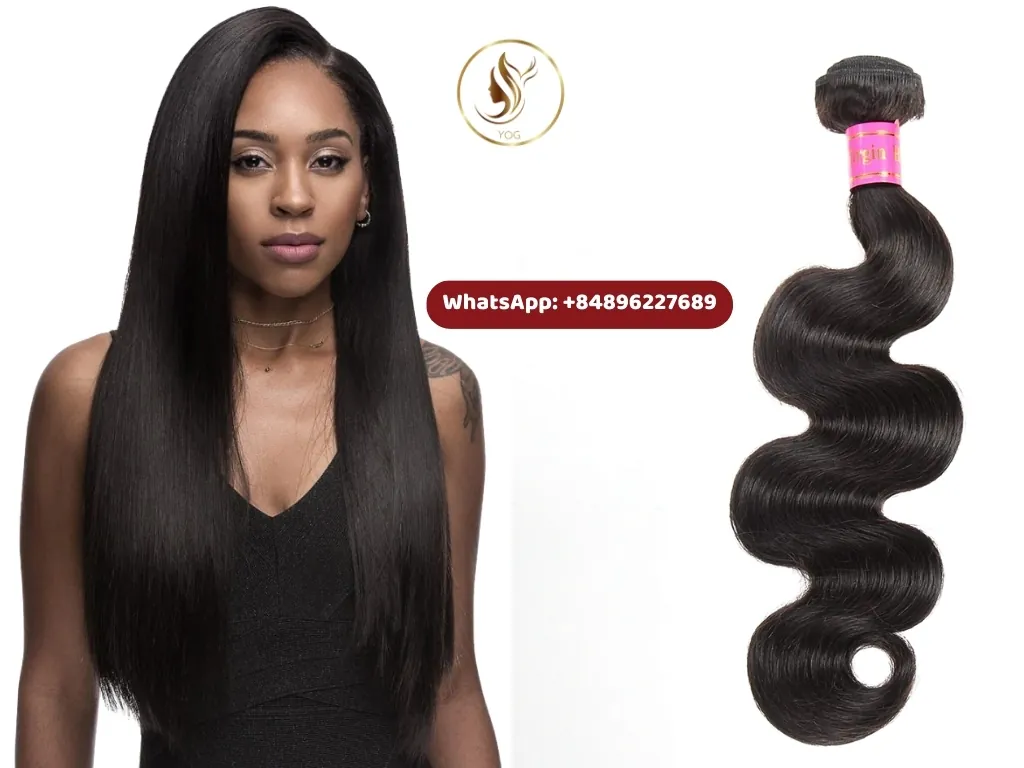
Peruvian hair is a premium human hair type that originates from donors in Peru. It’s highly regarded for its lightweight feel, natural softness, and versatile texture that blends well with both relaxed and natural African-American hair. One of its most notable features is that it gives a full, voluminous look without feeling heavy on the head, making it ideal for those who want a maximum body without bulk.
Peruvian hair can be styled in various ways such as straightened, curled, or worn in its natural wave and it holds styles extremely well with minimal product. It’s available in a range of products including Peruvian hair wigs and Peruvian hair bundles, which are popular for both sew-ins and wig construction and are often considered the best hair for sew-ins due to their lightweight nature..
What is Brazilian Hair?
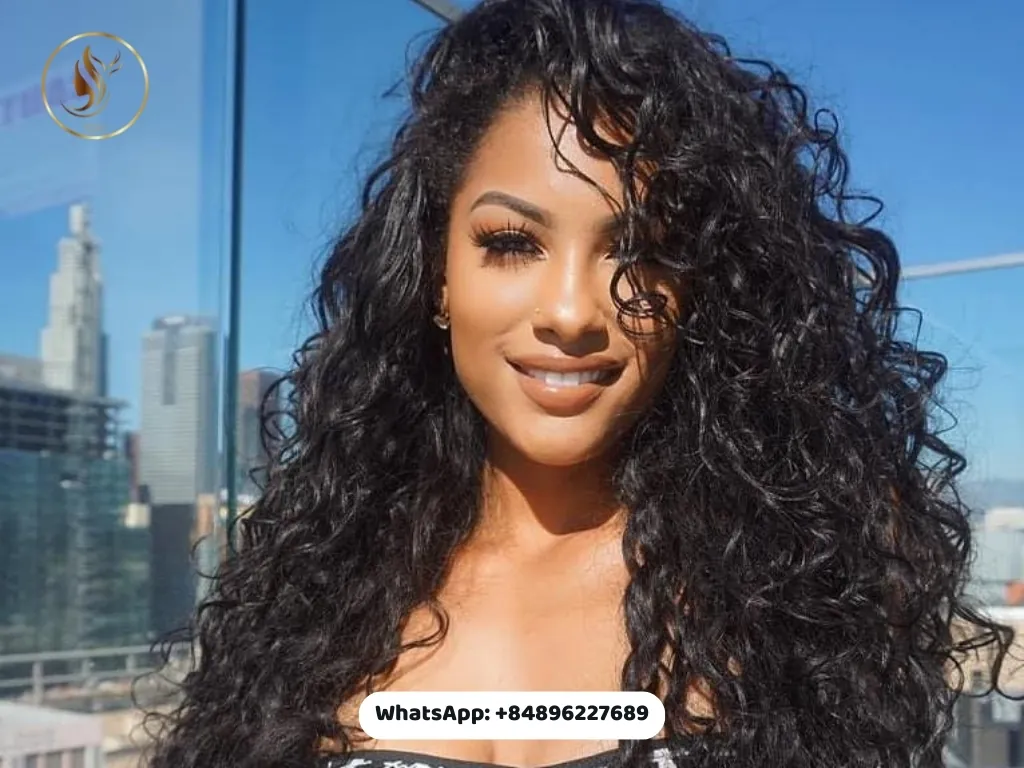
Brazilian hair is one of the most widely used and in-demand types of virgin hair extensions in the world. Known for its natural density, shine, and durability, Brazilian hair offers a fuller appearance and is slightly heavier than Peruvian hair. It typically comes in a variety of textures such as straight, body wave, deep wave, and curly, allowing for a range of styling options.
Its thickness and ability to hold curls make it especially ideal for long-lasting, voluminous styles. Brazilian hair blends seamlessly with many hair types, particularly those with medium to coarse textures.
Key differences between Peruvian Hair vs Brazilian Hair
Both Peruvian and Brazilian hair are popular choices, known for their quality and natural appearance. However, they possess distinct characteristics that cater to different preferences and needs.
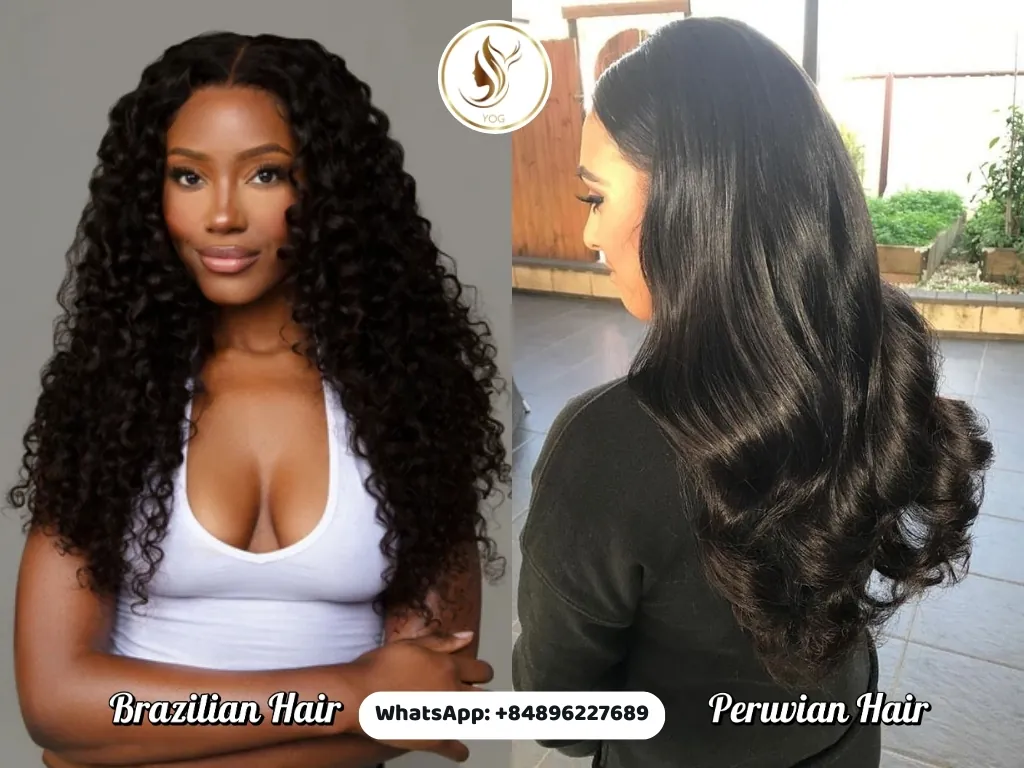
- Texture and thickness: Brazilian Hair typically has a thicker and coarser texture compared to Peruvian hair. It’s known for its full body, good bounce, and a natural shine. Brazilian hair can hold curls exceptionally well and is available in various textures like straight, wavy, and curly.
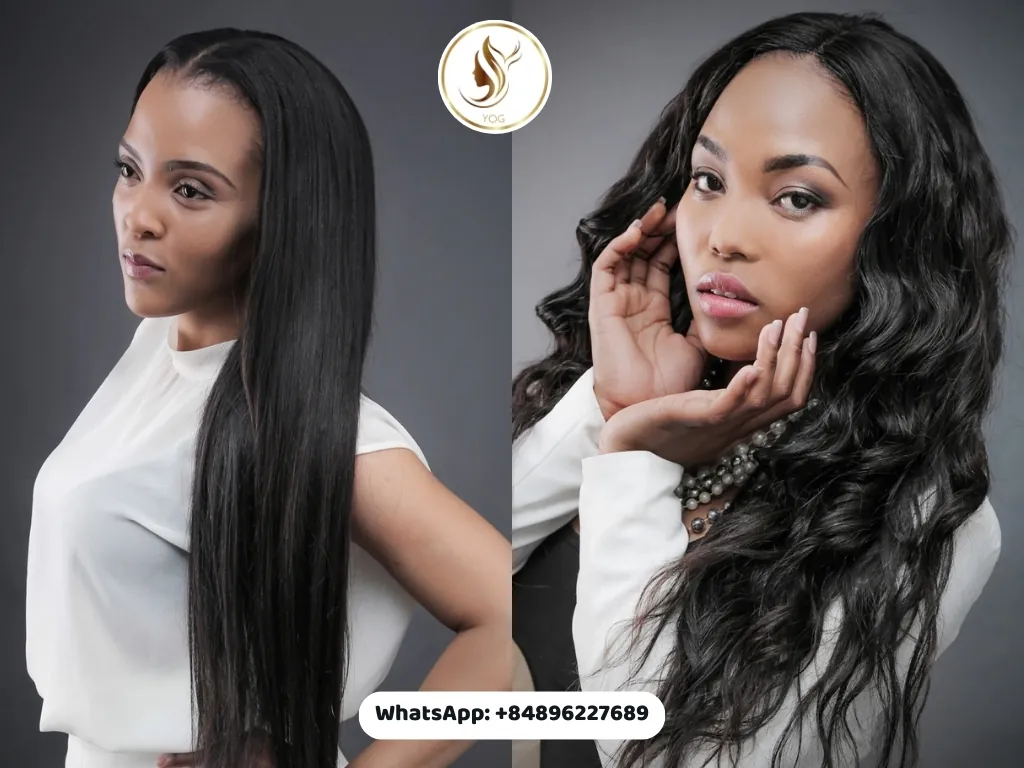
On the other hand, Peruvian hair is generally finer and lighter than Brazilian hair. It has a soft and silky texture with a natural bounce. Peruvian hair tends to blend well with African-American hair, especially relaxed African-American hair textures and those with fine to medium hair. It often has a slightly wavy appearance but can also be straight or curly.
- Density and volume: Brazilian hair naturally provides a significant amount of body and fullness due to the thickness of its individual strands. This makes it an excellent option for individuals desiring a voluminous and dramatic hairstyle. Peruvian hair, while not as inherently thick as Brazilian hair, still offers a commendable level of volume without feeling heavy or overwhelming. It strikes a balance, providing a natural-looking fullness that complements various styles without appearing overly artificial.
- Durability and maintenance: Brazilian hair stands out for its resilience. Its thicker structure allows it to withstand heat styling and the application of various products, making it one of the most durable hair extensions available. It is also less prone to tangling, contributing to its longevity when properly cared for.
Peruvian hair, while also durable, benefits from a slightly more gentle approach to maintenance due to its finer texture. However, it remains capable of enduring various styling techniques and maintaining its quality with consistent and appropriate care.
- Natural color: The natural color range of these hair types also presents a distinction. Brazilian hair typically occurs in darker shades, ranging from rich dark brown to deep black. Peruvian hair, on the other hand, often presents in medium to light brown tones, although variations can certainly be found through processing and dyeing. This natural color difference can influence the initial choice depending on the wearer’s natural hair color and desired outcome.
- Cost: Addressing the query of is Peruvian hair more expensive than Brazilian, the general trend in the market suggests that Brazilian hair tends to be slightly more premium in price compared to Peruvian hair. This is often attributed to its perceived thickness, durability, and overall market demand.
However, it is crucial to note that pricing can fluctuate significantly based on the quality of the hair (Remy versus non-Remy), the length and number of bundles purchased, the reputation of the vendor, and any additional processing or treatments applied to the hair. Therefore, while Brazilian hair often holds a slightly higher price point, high-quality Peruvian hair can certainly command a significant investment as well.
Pros and cons of Peruvian hair
Pros of Peruvian hair
Peruvian hair has gained significant popularity in the hair extensions and wig market due to several compelling advantages:
- Lightweight and comfortable: One of the most lauded benefits of Peruvian hair is its lightweight nature. Compared to some other hair types, such as Brazilian hair, Peruvian strands are generally finer and less dense. This translates to a lighter overall feel when worn as extensions or a wig, making it exceptionally comfortable for extended periods. This is particularly beneficial for individuals who find heavier hair types cumbersome or those with delicate natural hair.
- Soft and silky texture: Peruvian hair boasts a remarkably soft and silky texture that feels luxurious to the touch. This smooth quality contributes to its natural appearance and allows it to move fluidly, mimicking the behavior of healthy, natural hair. The softness also reduces the likelihood of stiffness, ensuring a more natural and graceful drape.
- Natural sheen: The sheen of Peruvian hair is often described as natural and subtle. It doesn’t possess the high gloss sometimes associated with Brazilian hair, which many users appreciate for its understated elegance. This natural luster allows Peruvian hair to blend seamlessly with various natural hair types without appearing overly artificial or shiny.
- Excellent blendability: Due to its medium density and fine texture, Peruvian hair tends to blend exceptionally well with a wide range of natural hair types, particularly those with relaxed African-American textures and fine to medium hair densities. This seamless integration is crucial for achieving a natural and undetectable look, whether using extensions or a wig.
- Good volume without heaviness: While lightweight, Peruvian hair can still provide a decent amount of volume. It offers a natural-looking fullness that avoids the bulky or heavy feeling that some thicker hair types can impart. This balance between volume and weight makes it a versatile option for various hairstyles.
- Versatility in styling: Peruvian hair is quite versatile and can be styled in various ways, including straightening, curling, and waving. It holds styles well, although its finer texture might require slightly different heat settings compared to thicker hair types. Its adaptability allows users to achieve a range of looks to suit different occasions.
- Durability: Despite its fine texture, Peruvian hair is known for its good durability when properly cared for. It can withstand regular washing and styling, maintaining its quality and appearance over time. However, due to its delicate nature compared to coarser hair types, gentle handling and appropriate hair care products are essential for longevity.
Cons of Peruvian hair
While Peruvian hair offers numerous benefits, it also has some potential drawbacks to consider:
- May not provide maximum volume for some users: Individuals seeking extremely voluminous hairstyles might find that Peruvian hair doesn’t offer the same level of inherent thickness and body as Brazilian hair. While volume can be achieved by using more bundles, the individual strands themselves are not as thick.
- Can be more prone to frizz in humid conditions: The silky texture of Peruvian hair can sometimes make it more susceptible to frizzing in humid environments compared to coarser hair types. Proper anti-frizz products and protective styling might be necessary in such conditions.
- May require more gentle handling: Due to its finer texture, Peruvian hair might require more gentle handling during washing, styling, and detangling to prevent damage or excessive shedding. Harsh brushing or aggressive styling should be avoided.
- Potential for higher cost for high-quality: While generally, Is Peruvian hair more expensive than Brazilian isn’t a definitive yes, high-quality Peruvian hair, especially virgin or Remy hair, can sometimes command a higher price due to its sought-after softness and natural look. The cost often depends on the vendor, length, and quality grade.
- Availability might be less consistent: Depending on the supplier, the availability of high-quality Peruvian hair might sometimes be less consistent compared to the more widely available Brazilian hair. This could potentially impact long-term matching or replacements.
Pros and cons of Brazilian hair
Pros of Brazilian hair
Brazilian hair boasts a range of advantages that cater to a wide array of preferences. Here are some good points of Brazilian hair:
- Thick and full-bodied texture: One of the most significant advantages of Brazilian hair is its thickness. The individual strands are typically denser and coarser compared to Peruvian or Malaysian hair, providing a naturally full-bodied and voluminous look. This inherent thickness makes it ideal for those seeking significant volume and a noticeable impact.
- Excellent durability: Brazilian hair is renowned for its resilience and durability. Its thicker structure allows it to withstand heat styling, coloring, and various chemical treatments relatively well. This robustness contributes to its longevity, making it a worthwhile investment for those who style their hair frequently or prefer long-lasting extensions or wigs.
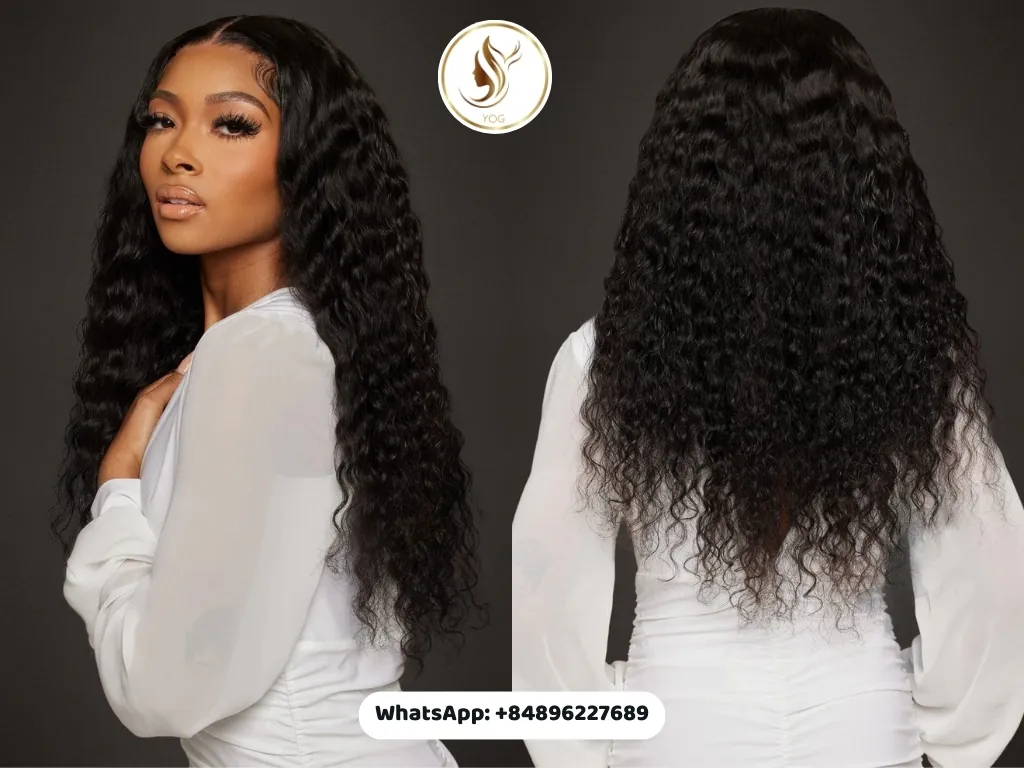
- Holds curls exceptionally well: The texture of Brazilian hair is particularly adept at holding curls. Whether you desire tight coils, bouncy waves, or loose, voluminous curls, Brazilian hair can maintain these styles effectively and for extended periods. This curl retention is a major draw for individuals who love textured hairstyles.
- Natural shine: Brazilian hair typically possesses a natural and healthy shine. This luster adds a vibrant and polished look to hairstyles, enhancing their overall appeal. While the shine is noticeable, it generally isn’t overly artificial, contributing to a healthy and well-maintained appearance.
- Versatility in styling: Despite its thickness, Brazilian hair is surprisingly versatile. It can be styled in various ways, from sleek and straight to deeply textured and curly. It responds well to heat styling tools and can be manipulated to achieve a wide range of looks.
- Less prone to tangling: Due to its thicker and smoother cuticle layer, Brazilian hair tends to be less prone to tangling compared to some finer hair types. This ease of maintenance is a significant benefit for daily wear and styling.
- Wide availability: Brazilian hair is one of the most widely available types of hair extensions and wigs on the market. This accessibility often translates to a broader range of options in terms of length, color, and texture, making it easier for consumers to find exactly what they are looking for.
Cons of Brazilian hair
Despite its numerous advantages, Brazilian hair also has some potential drawbacks to consider:
- Can feel heavier than other hair types: The thickness of Brazilian hair can sometimes result in a heavier feel compared to lighter options like Peruvian hair. This might be a concern for individuals who prefer a more weightless sensation or those with delicate natural hair.
- Higher shine might not suit everyone: While the natural shine of Brazilian hair is generally considered a pro, some individuals might prefer a more matte or subtle finish. In such cases, the inherent luster of Brazilian hair might not be ideal.
- Thicker texture might not blend seamlessly with very fine hair: Individuals with very fine or thin natural hair might find that the thicker strands of Brazilian hair don’t blend as seamlessly as finer textures like Peruvian hair. Achieving a truly undetectable look might require more careful layering and blending techniques.
- Higher cost: Generally, Is Peruvian hair more expensive than Brazilian is often answered with Brazilian hair being slightly more premium in price. This is often attributed to its thickness, durability, and high demand. However, prices can vary based on quality, vendor, and other factors.
Peruvian hair vs Brazilian hair: Which is best for you?
The answer of whether Peruvian or Brazilian hair depends on individual preferences and requirements. Both hair types offer unique characteristics that cater to different needs.
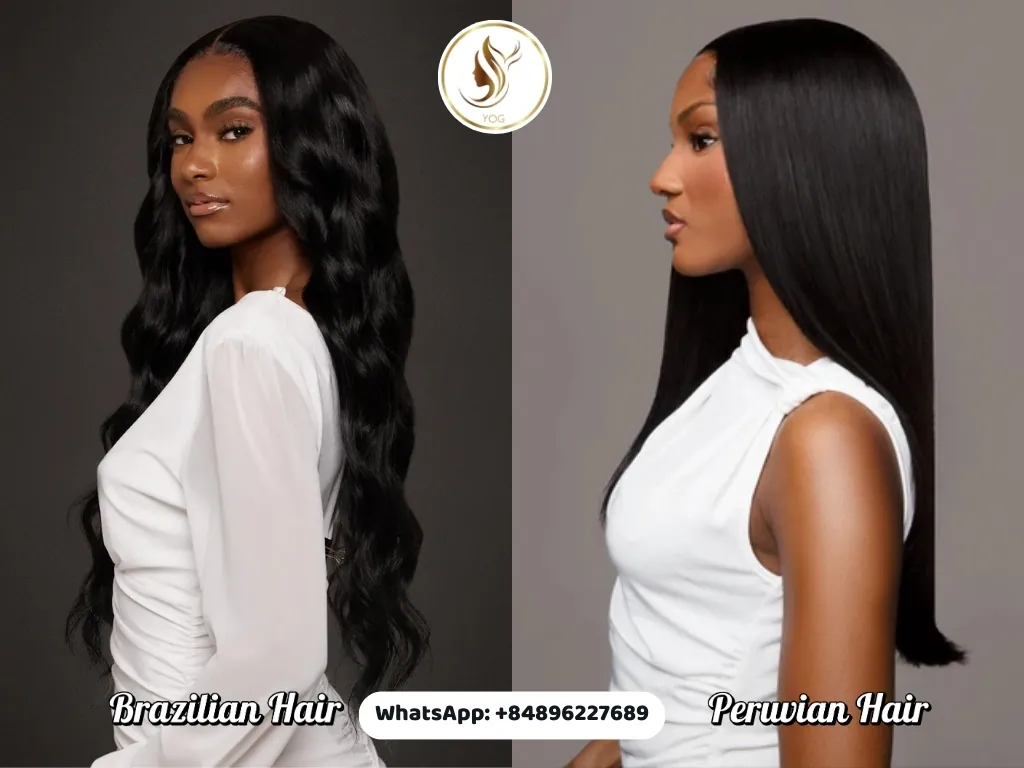
Choose Peruvian hair if you prioritize a lightweight feel, soft texture, natural sheen, and excellent blendability with fine to medium hair. You prefer a natural-looking volume and comfortable wear. Choose Brazilian hair if you prioritize significant volume, a thicker texture, noticeable shine, and durability for frequent styling. It’s also a great match for those with naturally thick hair.
Conclusion
In conclusion, understanding the Peruvian Hair vs Brazilian Hair differences is crucial to making the right choice for your styling needs. Ready to transform your hairstyle? Explore the diverse collection of high-quality hair extensions at Yoghair and discover the ideal texture and style to elevate your look.
- Instagram: @yoghair_wholesale_factory
- WhatsApp: +84896227689
- Email: wholesaleyoghair@gmail.com
- Website: yoghair.com


 Ms. Jenifer
